Showing posts with label #teacher. Show all posts

Wednesday, February 26, 2025

Birdbox: Beginning the School Year Blindfolded - February 26, 2025


“Uuummm…why do we need a blindfold for the back to school faculty meeting?”


I could see the fear and terror in her eyes as she asked. A sinister feeling began bubbling up throughout my body, fermenting in my gut. My legs became shaky with excitement. I knew that I had her, the anticipation, the trepidation, was eating at her, and as much as she was looking forward to the start of our 24/25 school year, she was dreading those first hours together. 


As a sly half smile began to rise towards my right ear, I finally responded as I saw beads of sweat begin to form on her suntanned brow. 


“Because. Are you scared?” 


After she let out a deep sigh, threw her hands up to the sky and then back towards the ground, she said with a hesitant, nervous laugh, “No, I just don’t know why we would need a blindfold for a faculty meeting!” 


*


Being an elementary school principal for the past thirteen years, I’ve always viewed faculty meetings as an opportunity to engage our staff with lessons that were out of the box, collaborative, and FUN! I know I can’t stand it, when I literally can’t stand because I’m bolted to a seat, in a meeting that lasts hours, so why would I ever expect that from the amazing educators I get to serve daily? While all of the activities I provide at our monthly faculty meetings are geared towards our staff and whatever topic we are diving into that day; data analysis, discussing hot topics in education, or problem solving, my goal is to use an activity that will engage them, making them forget they are spending a contractual hour or two after school, and find a way to make the activity their own and bring it back to their students. 


A successful faculty meeting begins days, sometimes weeks before it actually happens. Like any harvest, the seeds need to be planted and time needs to pass. Two weeks before our back to school faculty meeting was to take place, I sent out our “Welcome Back” email to staff. In it, I mentioned that for our faculty meeting portion of Institute Day One, all staff needed to bring a blindfold, and if someone didn’t bring one, I would provide one. That’s it, nothing more and nothing less to explain. One responsibility for Opening Day, bring your own blindfold. 


*


Opening Day for the 24/25 School Year has finally arrived! The day began with our entire district meeting in the middle school gym for an opening address from our superintendent, district admin, and keynote speaker. Throughout the morning, before everything kicked off and everyone was mingling, many staff came up to me and referenced the need for a blindfold. Each time, that sly half-smile would begin to raise towards my right ear. Each time it was brought up, I always responded the same. I would look towards the ground, then slowly lift my head up, stopping when our eyes met and locked. “You’ll see.” 


After a morning together at our district’s middle school, everyone grabbed a box lunch provided from our gracious board of education, and had about an hour to eat and get back to our campus. Once I got back to our building, I sprinted to my office and scarfed down my sandwich and chips like a stray dog who is enjoying their first meal in their newly adopted forever home. As I walked to our LRC (Learning Resource Center) I had a little skip in my step and a smile that reached from ear to ear. I love our faculty meetings. I love the anticipation leading up to them, the fun, friendly tension as everyone tries to come up with their own solution as to what we are going to be doing. 


As staff began to file into the room they were greeted by smiles and a mix of the top ‘90’s alternative hits playing. I noticed that some staff had scarves and headbands, while others had sleeping masks, and yet some had no hint of bringing a blindfold. After running through the welcome back spiel, introduction of new staff, my personal goals for the school year, I stopped, looked over the playing field for my hyped up activity, and asked, “Does everyone have a blindfold?”


Many reluctantly said they did, in which I replied with a puzzled look on my face as my eyebrows resembled Dwayne “The Rock” Johnson’s famous look from the squared circle, “Really, cuz I don’t see everyone having one.” 


At that point, almost everyone that did not have their blindfold in plain sight reached into the deep abyss of their purse, pocket, or portfolio and produced a blindfold. Only two staff admitted they did not have one. That sinister, half smile began rising towards my right ear, and I showed them what I would provide for a blindfold, a white, cotton mask provided by the government when students and staff returned back from the Pandemic. If you’re wondering what it looked like, imagine a female sanitary napkin that can wrap around your ears to be held to your face. One staff member quickly lept from their seat and flew out of the LRC, only to return within seconds with what could be used as a blindfold. 


“Alright, I need everyone to get into the group based on the number of their playing cards. I’ve mixed two decks together so we will have some groups of more than four. Find a table or area your group can get around to work collaboratively. And bring nothing but your blindfold with.” After stating the instructions like the host of a reality game show, I gave staff about 72 seconds to get to their area of their choosing. Once I saw groups claim their space, I walked over and placed a string of yarn on their playing area. Once everyone had their turf, I continued with the instructions. 


“Who has seen the movie Birdbox with Sandra Bullock on Netflix? Can someone who has seen it please give an elevator trailer for those who haven’t?” After being provided the synopsis of Birdbox from one of our social workers, the spotlight was back on me. 

“So what we’re going to do is everyone is going to put their blindfolds on and as a team, I need each group to create a perfect square, a box, while blindfolded. Once you think you have it, get my attention and I will come by to get a picture and assess your progress. Everyone got it? Blindfolds on!  Now go!”


Each group quickly got to work. Some dove right into beginning to create their box, while others talked about their approach and strategy. As I scaffolded the room, checking on everyone’s progress, not one person seemed to be cheating by not using their blindfold correctly. 


The ‘90’s alternative hits were silenced and the air now permeated with laughter. Teamwork was abundant as every group wanted to create the perfect box. Many of the groups called out my name to signify they were complete while others just yelled with laughter. One group all through their hands up into the sky, only to have their box fall apart into a circular-rectangular-squiggly shape. “You don’t have a box anymore once you let go! What were you thinking?” I got out through my own laughter, which only was fuel to enhance theirs louder and heartier. 


*


The Birdbox activity served the purpose of creating a fun, engaging, and friendly competitive atmosphere while building teamwork with staff that may not normally work with one another. We also discussed that while every group essentially completed the Birdbox challenge, some had more perfect squares than others, some took longer to reach their end goal, every group took a different approach, and each individual had a crucial role in Birdbox where each team needed to rely on and trust their members. 


When you take the blindfold off it sounds pretty similar to what ingredients lead to a successful classroom. 


***


Pick up my book, The Educulture Cookbook: Recipes & Dishes to Positively Transform Classroom & School Culture with EduMatch Publishing.

Thursday, December 3, 2020

Homework Helper - December 2, 2020

 Homework Helper
By, Michael Earnshaw
December 2, 2020
@MikeREarnshaw


I am very fortunate to have a PLN, my crew, that spans the United States and even crosses our borders. I get to speak to educators from all over, with different backgrounds and experiences, to help me learn and grow. I hope they would feel the same about me. We’re able to collaborate and help solve each other’s problems, share stories of successes and laughs about funny times, and also shed tears for situations that may not have personally affected us, yet being in the game we know exactly what our comrade is going through. Throughout all of these conversations, there is one topic, one issue, that always comes up. 

“These kids are not completing their homework! 2020 and remote learning have made it worse than ever! You can’t believe how many kids are failing simply because they’re not completing their asynchronous work!”

I know, you’ve been part of this conversation, we all have. It doesn’t matter what coast you’re from or if you’re educating young minds over the borders, another pandemic the field of education is facing is that many students are not completing independent work. Much of this plague is happening for those students that are learning remotely. It’s not only remote learners, but the majority of our students either have been, currently are, or will be learning remotely at one point of the 2020/2021 school year. This non-completion of homework virus, much like the Covid-19 virus, is something we as educators must try and combat even if we do not have all of the answers. We can put some things in place to help our students, our future, understand the importance of asynchronous work. 

First, the homework debate has been going on for years and we’re not going to get into that with this blog. Every educator has their own differing opinion on the value of homework and honestly, I don’t see the argument coming to a consensus while I’m in the field (I’ve still got about 30 years or so). What we need to look at is the situation our students are currently in. For over a decade now educators have been stating that kids aren’t learning at the rate they used to, that engagement and attention are almost non-existent because we are competing with the technology at kids’ disposal when they’re outside of school hours. Hell, we’ve been competing with this DURING school hours with cell phones serving as mini-computers in the pockets of every child at every grade level. 

So the argument has been that today’s students are disengaged in school because they have too much screen time. Now with the Covid-19 Pandemic what have we done? We’ve added about seven MORE hours of screen time for our students with remote learning. Look, I understand this had to be done, how else could we reach our students when it’s not safe to bring us all together within our walls. We will never be able to combat or lower the amount of screen time students utilize when they’re not with us. If we thought that they had too much screen time before, the 2020/2021 year has now grown insurmountable! Screen time is screen time. It doesn’t matter if it’s video games, movies, Youtube, or remote learning, staring at a screen is screen time. 

Like I said earlier, we can’t control or limit how much screen time a student partakes in when they are on their own time. What we can do is limit how much screen time they utilize when they are with us, whether that is synchronous or asynchronous learning. We already know that during our instruction and class discussions they will be with us via a screen. Educators need to take inventory of how much time there they are requiring. Regardless of the grade level, students, and the educator, must take movement and mindfulness breaks. There’s no perfect formula, but personally, I would need one about every 20 - 30 minutes. 

Now we must look at what we are assigning students to complete for their asynchronous learning. I’m pretty positive that it’s going to include more screen time, especially if we are in a remote learning environment. I’ve talked to many educators and have also seen first hand that much of this asynchronous work is basically a digital worksheet. Let me ask you this, after sitting in a virtual classroom for even an hour, how exciting is it to complete more time on a screen with a worksheet? We knew that when our classrooms were full of students that worksheets weren’t engaging so what makes this time any different? 

Before you assign asynchronous work, or homework as many are calling it, stop and evaluate it yourself. Would it draw you in? Is it engaging? Is it going to assess and enhance what was learned that day or is it simply compliance? Is there any other way this same assessment could be given that wasn’t staring at a screen? Think back to all of the various, out of the box activities you used to use when school was “normal.” Dioramas, poems, songs, artistic paintings or drawings, interpretive dance, podcasting, blogging, and the list goes on and on. Why can’t we still utilize these assessment approaches even during remote learning? The answer is we can, and we must! By having students partake in an activity that is THEIR choice and focuses on THEIR strengths I’m sure we would get more “homework” returned. Plus, it’ll take students away from a screen for a while. Yes, they’ll have to get back on to submit or record what they’re doing, but the focus isn’t simply staring at a screen completing a digital worksheet. 

I don’t know if this is the solution, but I know that I can’t sit around any longer and just complain. I’m willing to try something to see if it will help. If it does, great! If not, then we try another approach. I hope you will too. Now it’s time to get up and take a walk around before I visit a virtual classroom. 


Wednesday, November 4, 2020

High Cholesterol - November 3, 2020

 High Cholesterol
By, Michael Earnshaw
@MikeREarnshaw
November 3, 2020


“I’m sorry man, I know how hard you worked to lower it,” was the text that came through from my brother-in-law. I thought about it for a while before responding. 

I turned 40 in March of 2020. The day before my birthday I visited my doctor. I’m not one to visit regularly, I know, I’ve already heard it from my wife, but this visit was warranted. Something came up I needed to get it checked out (and since this blog isn’t about that situation I’ll let you know everything for the visit came out fine). Being as I hadn’t been to the doctor in about three years he wanted me to get some bloodwork done, especially since I was turning 40. I wasn’t expecting anything out of the ordinary, I’ve always been a healthy guy. 

My watch started vibrating, alerting me that I had a call coming in. A name didn’t pop up, but I knew the number was the doctor’s office. I stealthily exited the class I was hanging out in and made my way to the nearest door to step outside on our playground and take the call. I answered just shy of making it to the door so I didn’t lose it. We went through the formalities and then I heard something I never could have expected. 

“Your cholesterol levels are very high and the doctor wants to speak with you about treatments.” 

A few days later I was back in his office being explained all of the differences between LDL, HDL, triglycerides, and how I had a lot of bad cholesterol but just enough good cholesterol that I wouldn’t drop dead any time soon. That’s good news I guess. 

“You’ve got two options, Michael, one, start medication and we test you in 6 months and see where your levels are at. Or two, you say you’re going to change your diet, limit alcohol, workout more, and then when you come back in six months, if your levels haven’t changed, you’re going on medication. No discussion,” were the choices my doctor handed me. 

I have never been a fan of medication, so I chose option two. 

Six months flew by. I got my labs redone, anxiously awaiting to hear the results. I felt that familiar vibration on my left wrist on a Friday while solving the World’s problems with my assistant principal. 

“So your LDL levels were higher than before. You’re going on 40 mg of Lipitor. We’ll have an order for your labs to be checked again in March.” This was spoken by my doctor’s nurse. My doctor didn’t even give me a call, no opportunity for a conversation, just like he promised. 

Now I’m not going to lie, I was a little upset by this news. I had made some adjustments to my diet, worked out as I usually did, and hoped the levels would lower and I could stay off meds. But as I reflected on the past six months I realized I could have done so much more. Instead of truly making the changes I knew I needed to make I found myself putting blame on “The Pandemic.” It was the pandemic’s fault I snacked on Flaming Hot Munchies each night. It was the pandemics fault I skipped a workout because of staying up later than I should have the night before. It was the pandemic’s fault I couldn’t get my cholesterol lowered by partaking all of the new healthy lifestyle changes I planned out in my head.

Excuses. That’s all it is. Too many times, when goals aren’t reached, I find myself blaming someone or something else. It makes it much easier to live with knowing the undesired result was out of my hands. But now I realize that is no way to live. That is not the message I want to send to my kids, my wife, staff, or students. I want to model that hard work pays off and we need to work towards our goals. And if the result isn’t what we hoped for we own it, make adjustments, and start again. 

I texted my brother-in-law back, “Haha, thanx man, but honestly, I could have done so much better. Luckily, it’s not too late. Time to make those changes now and hopefully get off the meds in 6 months. I’d rather rely on myself.” 


Tuesday, May 21, 2019

Dreams vs. Goals Rd. 1 - May 21, 2019

Dreams vs. Goals Rd. 1 
May 21, 2019 
By, Michael Earnshaw 
@mearnshaw158 

Image result for dreams

There is a huge misconception when it comes to understanding the importance of having dreams and goals in one’s life. Since we are young, we are taught to have big dreams, dreams that are going to take us to places we’ve never imagined! We’ll discover new lands, create music no ears have ever been christened with, cure diseases that haven’t even been birthed yet. This is all great, and I am 100% for inspiring our kids to have big, bold, dreams. But we must take it a step further.

 That’s the key, we must take our dreams to the next level 

Nobody ever faults a child for having bold dreams. It's the adults, the professionals, that get scoffed at when sharing theirs. This is an inevitable piece of life. The reason being, many never take the next step and transform their dreams into reality. There comes a turning point in life when we reach the age where responsibility, drive, and adulthood take over. Unfortunately, this is the time many people’s dreams wither away and die like that prom corsage sitting on the bedroom floor. It doesn’t have to be this way.  

Those who take their dreams, who hold onto them despite how crazy others may think they are, those are the ones that are viewed as heroes, as geniuses. They were not afraid to keep the dream alive. The way it was kept breathing was by spending time in a cocoon and then reemerging as a goal.  

Goals differ from dreams in the sense that the idea has been brought to reality. The individual has put thought and a plan of action into reaching a destination. When someone has a goal they are reaching for, they are not seen as crazy like those chasing dreams. It’s crucial that we teach our students, our kids, to not only have big grandiose dreams, but to manifest them into goals.  

Thursday, May 9, 2019

Teachable Moments - May 8, 2019

Teachable Moments 
By, Michael Earnshaw 
May 8, 2019 
@mearnshaw158 

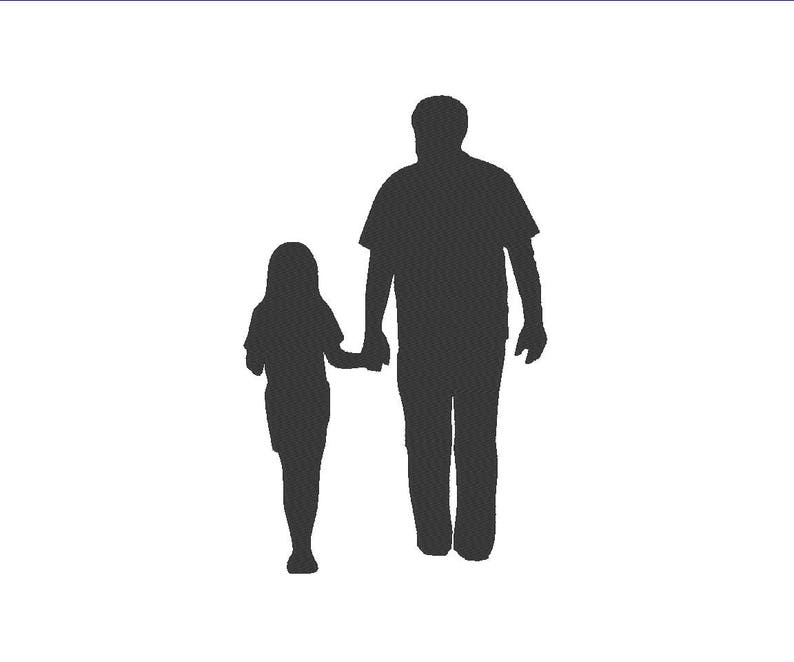
Image result for father daughter silhouette

“Daddy, why don’t you want to go in there? I want to see what they have?” was what my daughter questioned, displaying confusion as to why I was telling her “no” to a simple request many parents would grant without hesitation. I replied, “Because babe, I said so, we have some other things I have to take care of.” Of course, with her being 7 my answer didn’t suffice. Eventually, I pulled rank and silenced her petition, “No, it’s done, don’t ask any more please!” Silence.  

My daughter wasn’t mad or hold a grudge the rest of the evening, and we had a great time together. Before heading home for the night, she pulled out her crowbar and tried prying one more time, one last ditch effort. “Dad, now can we check it out?” I took in a big hit of air, gazed into those eyes that melt my heart and said, “Honey, I’m sorry, but no, it’s over with now anyways.” Silence.  

We did one last sweep throughout the hallways, checking over everything to ensure there wasn’t something we missed. It was then we were approached by someone needing a favor. I put on a smile and graciously helped them with their simple request. My daughter threw on her coat, I grabbed my car keys and we headed home.  

As I was driving my daughter asked in an inquisitive voice, “Dad, why wouldn’t you let me see what they had in there? I wasn’t going to buy anything, I just wanted to look.” I pondered how I would respond for a few seconds. “Babe, I didn’t want us to go in there because there were some unfriendly people in there. They aren’t very happy with Daddy.” With a slight tilt of her head and scrunching of her brow she replied, “Why don’t they like you? What did you do?” I gazed at my daughter from my rear-view mirror and said, “They just don’t agree with or like the way Daddy does some things. They aren’t very happy with me and have a lot of negativity. Daddy doesn’t have time or the need to bring that negativity around him or his life.” The wheels were turning in my daughter’s beautiful brain. “But Dad, why’d you help that lady? Is she one of the people who aren’t happy with you?” 

My daughter is so smart. She wasn’t going to let this go until she knew why I would help someone who isn’t very fond of me. I knew I had to respond with the right words, this was a teachable moment.  

“Just because someone doesn’t like another person, that doesn’t give anyone the right to be disrespectful or unkind back. I don’t have room for negativity in my life. I’m a kind person, and if I put kindness out there, I know it’s going to come back to me.”  

That was my response, and without me saying that our conversation was over, it was over. I hope my daughter understands why I live my life with a PMA (Positive Mental Attitude) mindset. I pray that she can follow in my footsteps. Only time will tell if she learned from this lesson. I believe she did.  

Monday, April 29, 2019

Little Mac Just Wanted a Dancing Partner in the Squared Circle - 4/29/19

Little Mac Just Wanted a Dancing Partner in the Squared Circle 
By, Michael Earnshaw 
April 29, 2019 
@mearnshaw158 

Image result for little mac

Yesterday I was blessed and got to spend some quality time with my son in our Man Cave. My wife was working, as she does every Sunday, and my daughter was invited for a play date at one of her best friend’s homes. This left just me and my son together. Our time started as individuals, he was playing his Nintendo Switch while I straightened up, did laundry, and put together our new patio table. He would continually come and find me and excitedly ask, “Dad, when can we go into the Man Cave?” 

After I completed my chores, I rummaged through his backpack and found some weekend homework he had buried in the pit. I approached him, asked if it was homework, and he reluctantly said it was, but he didn’t want to do it. I told him if he cranked it out he would be finished at the same time I was and then we could hang out. Now usually getting my son to complete his homework is more excruciating than a root canal with no meds. To my surprise, he plopped down at the table and got right to work! He took his time to ensure he did everything correct, but he got it done without me having to plead, persuade, guide, and sit right next to him. I knew there had to be catch.  

Once we got into the cave he said that he only wanted to watch me play Punch Out! and get to Mr. Dream. I tried to convince him that we should play something together, start a new file on his new Super Mario Bros. Deluxe game, but he insisted on watching me live my boxing dreams out through Little Mac. Again, I knew he was up to something and soon I would figure it out.  

As I ducked, weaved, and jabbed me way through each circuit, my son munched on popcorn and talked to me about video games, school, and life in general. We laughed, smiled, and had a great time talking about everything, anything, and nothing. It was then I finally realized his what he was up to. 

It did not matter what my son and I did together. All my son wanted was to spend time with me.  
Kids do not care what they do with the adults in their lives, what matters to them is that they are WITH them.  

I began to think about many of our students, students that don’t have parents and families that can, or are able to, spend quality time with. That’s where we, as educators, come in. Sit down and take an inventory of how many moments you have throughout your day where you can talk with a student. I challenge you to give up one lunch a week to either eat with a table of students or invite them to eat with you in your classroom. Instead of checking your email or texts when students are working on a task, go chat with some. At recess, get involved, play a game, draw with chalk and get some conversations going.  

Many of our students don’t have an adult outside of school who is able to give them undivided attention. As an educator you can make that difference for kids. Take advantage of this, don’t let moments slip by, and be their difference maker!